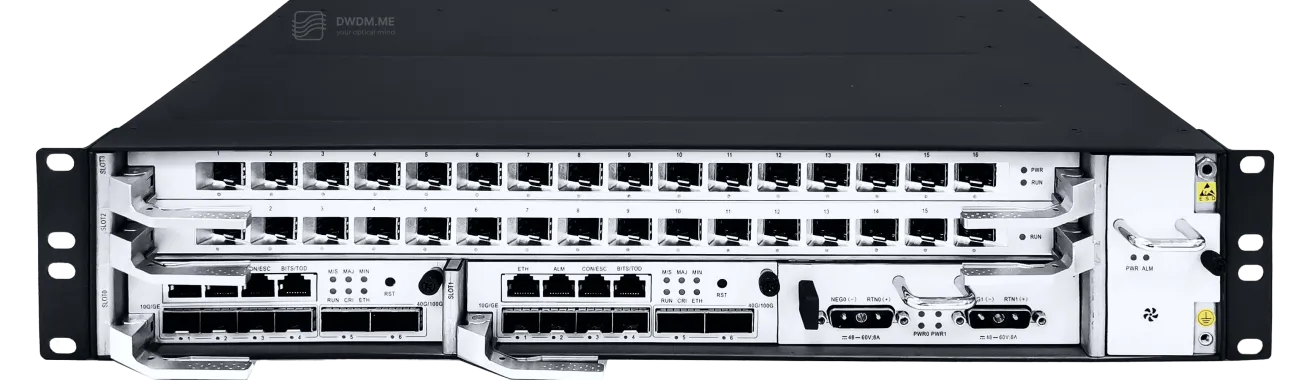


Optical transceivers (modules)
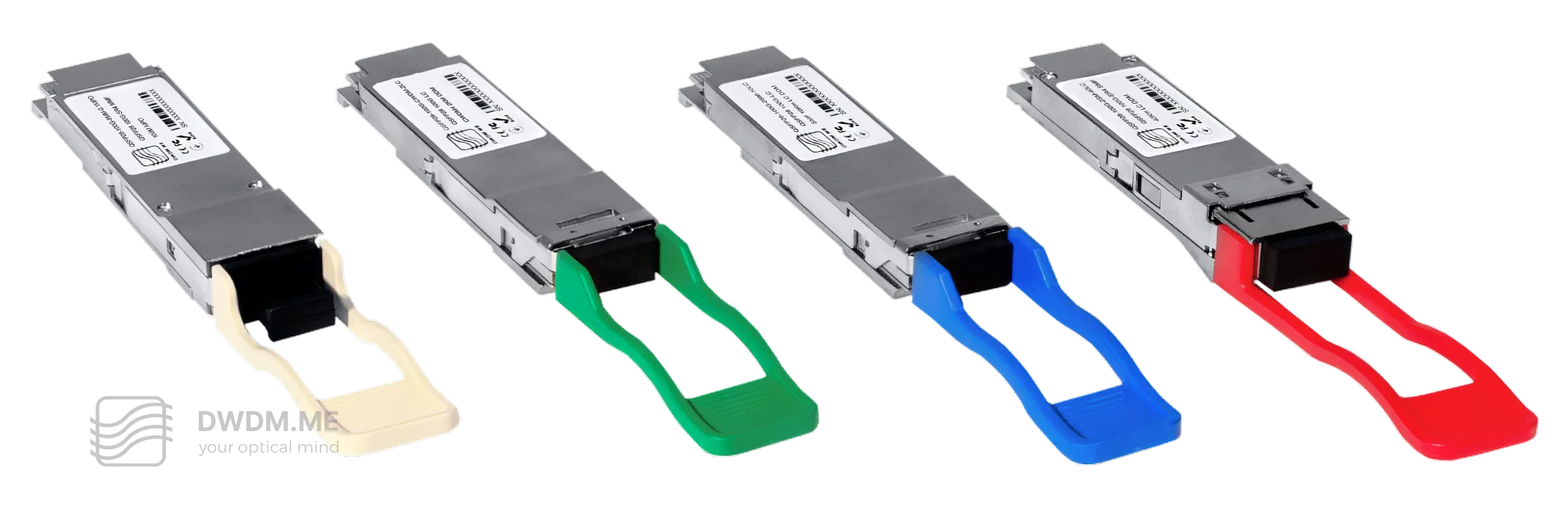

Available Form-Factors
| Form Factor | Speed | Use Cases | Range |
|---|---|---|---|
| SFP | 1G | Metro Ethernet | up to 160 km |
| SFP+ | 10G | DWDM, CWDM, backbone networks, data centers | up to 100 km |
| XFP | 10G | DWDM, CWDM, backbone networks, data centers | up to 80 km |
| QSFP+ | 40G | Cloud platforms, DWDM, CWDM, backbone networks, data centers | up to 80 km |
| QSFP28 | 100G | DWDM, CWDM, backbone networks, data centers | up to 80 km |
| QSFPDD | 400G | DWDM, CWDM, backbone networks | up to 20 km |
| CFP/CFP2 | 100–400G | DWDM, CWDM, backbone networks | up to 1000+ km |
Also available are DWDM SFP+ modules with fixed or tunable wavelengths, supporting ITU grids of 100 GHz and 50 GHz.
Where are optical transceivers used
Optical transceivers are widely used in a variety of areas where high throughput and reliable data transmission are required.
-
 DWDM and CWDM networks
 -
 Data centers and telecom providers
 -
 Ethernet backbone networks 1G/10G/40G/100G
 -
Long-distance video surveillance
-
 Mobile television stations
 -
Video and audio equipment (directors' consoles)
-
 Cloud infrastructure
 -
 Corporate and Campus Networks
 DWDM and CWDM networks
 Data centers and telecom providers
 Ethernet backbone networks 1G/10G/40G/100G
 Long-distance video surveillance
 Mobile television stations
 Video and audio equipment (directors' consoles)
 Cloud infrastructure
 Corporate and Campus Networks
Thanks to their versatility and wide choice of form factors, the transceivers can be easily integrated into both existing infrastructure and scalable network solutions.
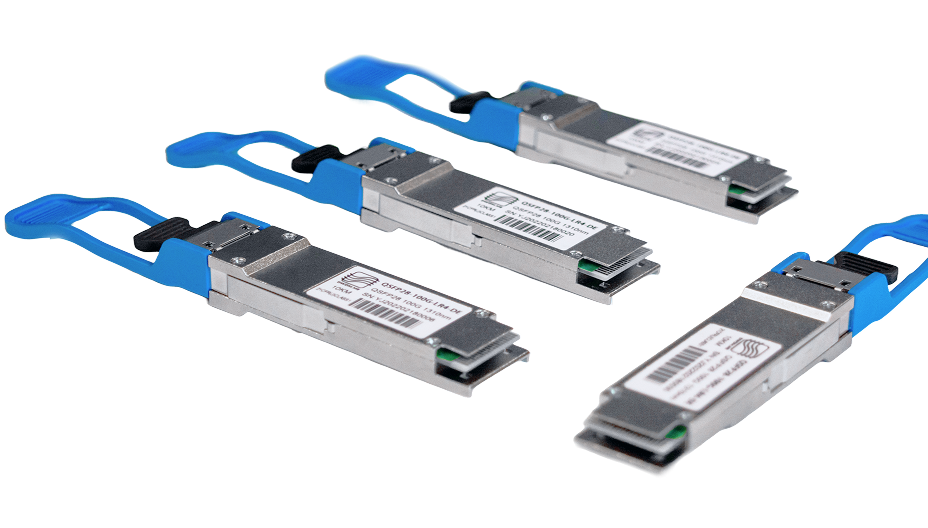

How to choose the right transceiver
When choosing a transceiver, it is important to consider:
-
data transfer rate (1G, 10G, 25G, 40G, 100G, 400G);
-
 fiber type (single-mode SMF or multi-mode MMF);
 -
transmission range (from 100 m to 160 km);
-
 compatibility with your equipment;
 -
 form factor and interface type (LC, SC, MPO);
 -
availability of DDM monitoring;
-
required operating wavelengths.
 fiber type (single-mode SMF or multi-mode MMF);
 compatibility with your equipment;
 form factor and interface type (LC, SC, MPO);
Important!
For trunk solutions with EDFA amplifiers, DWDM SFP+ 10G ZR (80 km) or DWDM SFP 1.25G 160 km are often chosen – they are compatible with multiplexers and optical amplifiers.
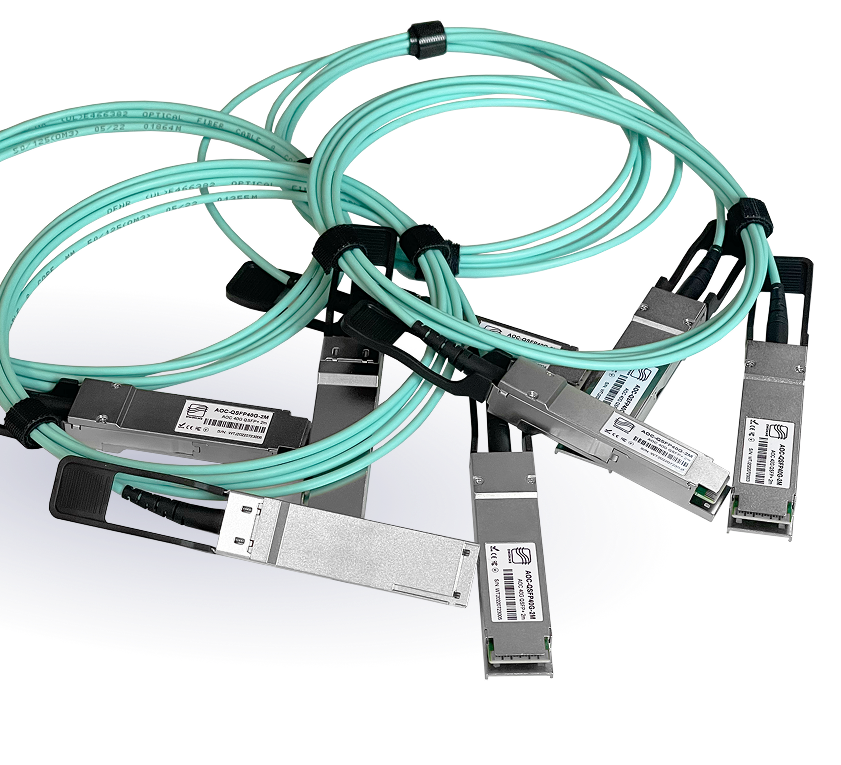



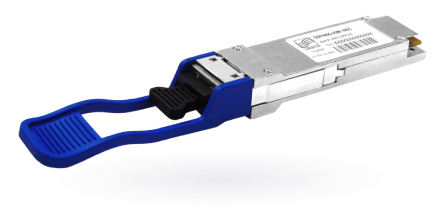
Optical transceivers QSFP/QSFP28
-
QSFP (Quad Small Form-Factor Pluggable) optical transceiver allows up to four optical channels to be combined in a single module. Primarily used for data transmission at speeds up to 40 Gbps
-
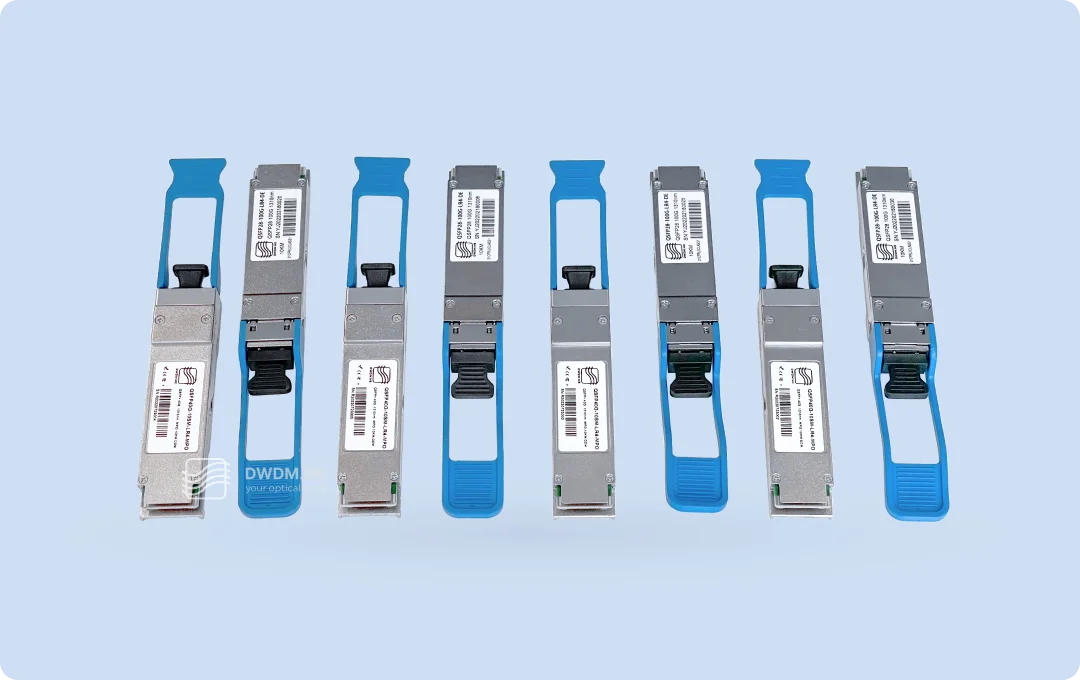
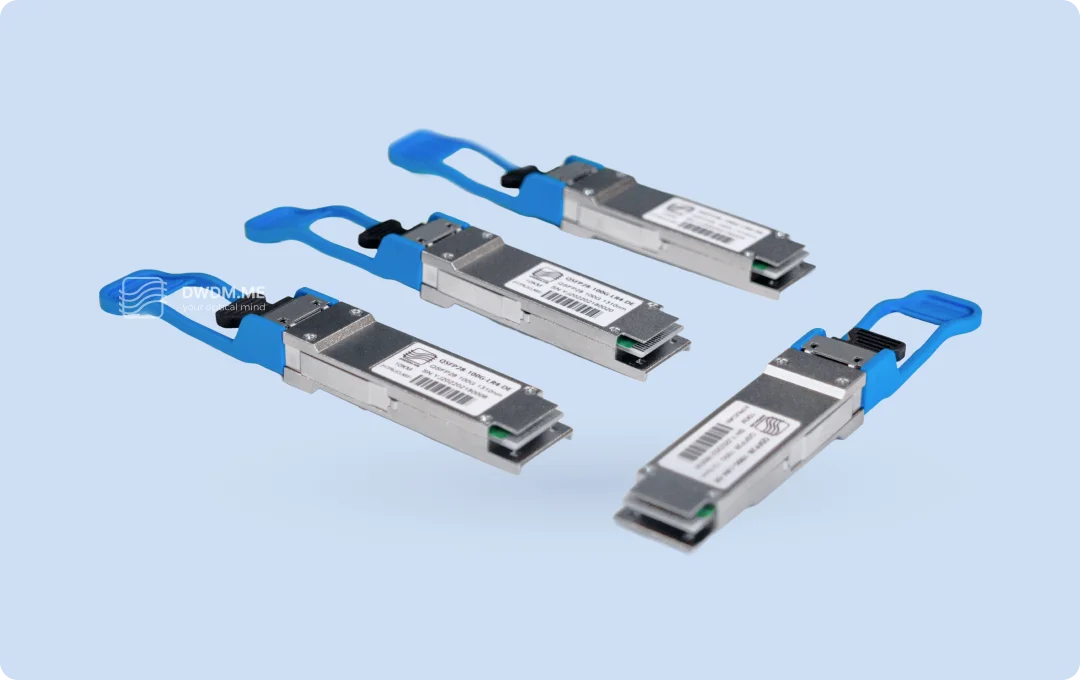
QSFP28 (Quad Small Form-Factor Pluggable 28) optical transceiver is an improved version of QSFP that supports data rates up to 100 Gbps. Generally used in 100 Gigabit Ethernet networks.


Optical transceivers CWDM/DWDM
-
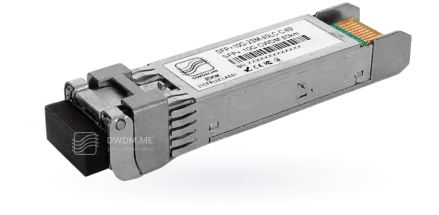
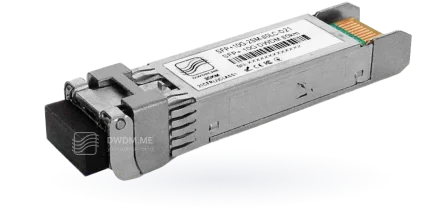
CWDM (Coarse Wavelength Division Multiplexing) optical transceiver uses wide wavelength spacing to multiplex different data streams. Typically supports less than 8 wavelengths.
-
DWDM (Dense Wavelength Division Multiplexing) optical transceiver enables multiplexing of more than 40 data channels on a single fibre optic line using narrow wavelength spacing. Provides higher bandwidth and transmission range compared to CWDM. Most commonly used in large telecommunications networks and data centres.
Optical transceivers SFP/SFP+/SFP28
-
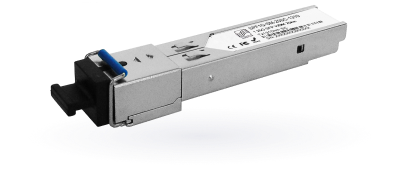
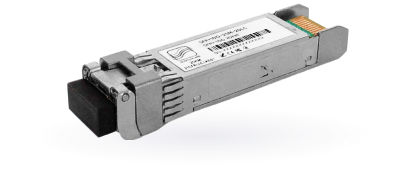
SFP (Small Form-Factor Pluggable) optical transceivers mainly support data rates up to 2.5 Gbps (Gigabit Ethernet) and include various interface types such as Ethernet, Fibre Channel, SONET/SDH and others.
-
SFP+ (Enhanced Small Form-Factor Pluggable) optical transceiver is an improved version of SFP, allowing data transmission mainly at speeds up to 10 Gbps.
-
SFP28 (Small Form-Factor Pluggable 28) optical transceiver is designed for data transfer rates up to 25 Gbps. It is used in 25 Gigabit Ethernet networks.
Optical cables DAC/AOC
-
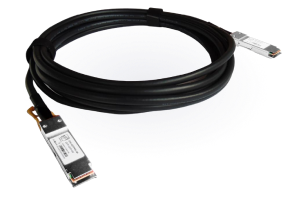
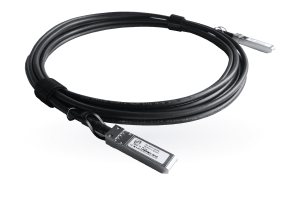
DAC (Direct Attach Copper Cable) a twinaxial cable that uses copper wires for direct connection between network devices over short distances: Passive Cable 1 - 7 metres, Active Cable 7 - 20 metres. Mostly used in situations where low latency and cost are required.
-
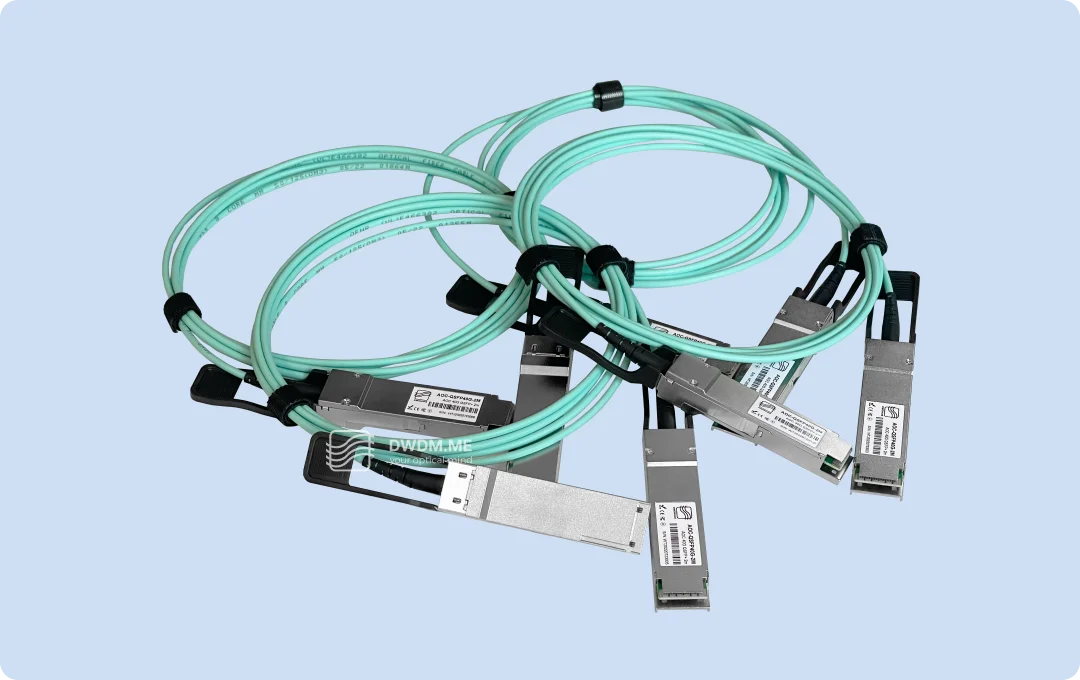
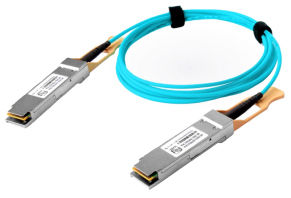
AOC (Active Optical Cable) An active ultrafast cable that uses optical fibre to transfer data between devices. Provides higher bandwidth and can be used for longer distances up to 300 metres.


Optical adapter device
-
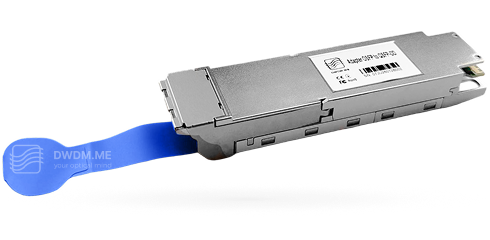
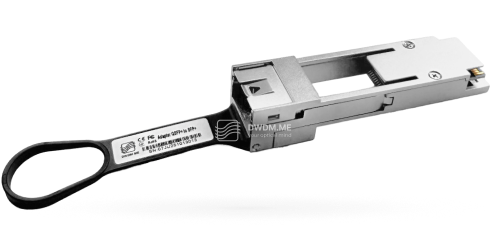
QSFP+ to SFP+ Adapter has a built-in SFP+ adapter under QSFP+ form factor, with data rate up to 14Gbps per channle. It provides a smooth and cost-effective transition to 40 Gigabit Ethernet, providing the ability to use low-speed 1G SFP or 10G SFP+ modules in empty 40G QSFP ports or when the other end of the network operates at lower speeds.
-
QSFP to QSFP-DD Adapter enables data transmission from 800 Gigabit Ethernet to 400G, 200G, 100G, or 40 Gigabit Ethernet for OSFP Fined-top modules. It provides a smooth and cost-effective transition to 800 Gigabit Ethernet, allowing the use of lower-speed OSFP FIN modules or enhanced QSFP-DD modules in available OSFP FIN ports when the other end of the network operates at lower speeds.
Product Gallery