

IDC Solutions for Inter-Data Center Connectivity
In today’s fast-paced digital environment, it is critical to ensure uninterrupted connectivity between Data Centres (DCs). Of particular importance is supporting the network infrastructure of Data Centres (IDCs) that are focused on providing Internet-based services. Providing reliable interconnections between IDCs requires specialised network solutions designed to meet the IDC’s requirements for speed, reliability and security of data transmission. Using DWDM (Dense Wavelength Division Multiplexing) optical transmission technology is one of the most effective solutions to meet the growing demand for high-speed and reliable data centre-to-data centre connectivity in today’s IT infrastructure. The technology enables multiple data streams to be transmitted over optical fibre using different wavelengths of light, significantly increasing network capacity and providing organisations with the ability to transmit huge volumes of data at high speeds.

Using IDC’s DWDM.ME interconnect solutions, reliable, scalable and high-performance networks can be established to support evolving business needs and provide seamless connectivity.
Solutions based on DWDM technology provide a number of advantages for IDC:

Increased bandwidth
In DWDM-based solutions, optical multiplexers combine individual WDM channels into a group signal for simultaneous transmission over a single optical fibre, and demultiplexers in turn split this group signal back into individual channels based on their wavelength. In this way, an optical DWDM system allows the bandwidth of each fibre to be increased, as each channel can transmit data independently of each other without interfering with other channels on the same fibre. This method significantly increases the capacity of fibre networks, allowing data to be transmitted at speeds of up to several terabits per second, which is particularly important for IDC data centres, where the ever-increasing volume of data requires high-speed and efficient transmission, minimising delays in information transfer and ensuring smooth operation of systems
High speed data transmission
DWDM.ME solutions allow to organise communication channels for data transmission at the speed of 100G/200G/400G. For modern IDC high speed transmission allows to effectively provide the required amount of traffic for real-time data processing. The use of high-speed communication channels allows more efficient use of available resources and improves network performance, which is especially important in ensuring efficient transmission of growing data volumes and support for modern business processes.

Long distance connectivity
Properly constructed and organised optical system, working on the basis of DWDM, can significantly increase the distance of data transmission without loss of speed or signal quality. This advantage makes DWDM.ME equipment especially relevant for building backbone optical networks, city and corporate networks, organisations with distributed data processing centres.
Reliability and high availability of the network
DWDM.ME solutions provide mechanisms of redundancy and recovery from failures to ensure continuous interconnection between data centres. These mechanisms play a key role in ensuring high availability and reliability of the IDC network. The use of redundant fibre paths and the ability to automatically redirect traffic in the event of failure allows organisations to minimise downtime and maintain uninterrupted access to critical data resources.


Flexibility and scalability
Fibre optic networks based on DWDM technology offer unprecedented scalability and flexibility, allowing companies to quickly adapt to changing business needs and network requirements. Scaling to new markets and handling ever-increasing data volumes, an optical DWDM system provides the flexibility needed to support business growth. Equipment based on DWDM technology makes it easy to manage data traffic, optimising its distribution across different fibre channels and wavelength levels. This allows the network infrastructure to adapt to changing business requirements and scale as needed.
Integration with existing infrastructure
Optical DWDM systems offer compatibility with various types of optical equipment, allowing them to be integrated into existing networks without the need for complete equipment replacement. This allows companies to reduce the cost of network upgrades and utilise existing resources more efficiently.
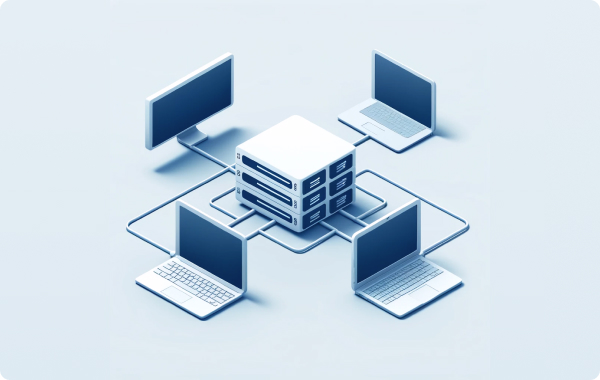
An enterprise’s network infrastructure requires reliable, high-performance equipment to ensure efficient data transmission. Its stability largely depends on the quality of interconnection between data centers (DCs). IDC-class solutions (Inter Data Center Connectivity) provide load balancing, failover protection, service scalability, and rapid disaster recovery. These solutions are based on fiber optic channels and utilize modern protocols such as MPLS and Ethernet VPN, ensuring high flexibility, speed, and reliability of data transmission.
Where IDC Solutions Are Used
Fiber optic IDC solutions are in demand across several key sectors:
- Financial sector: used by banks, insurance companies, and investment funds, where low latency, high speeds, and secure data transmission are critical.
- Corporate networks: ensure high application availability, centralized data access, and stable performance of distributed IT infrastructures.
- Cloud providers: applied for efficient traffic routing, secure data transmission, and uninterrupted cloud service delivery.
- Government agencies: enable secure data exchange, backup, and failure resilience in mission-critical systems.
- Telecom operators: support high-speed connections between network nodes and ensure the transmission of large volumes of data.
IDC solutions are essential wherever secure, high-speed, and reliable connections with guaranteed uptime are required.
Recommendations for Choosing the Right IDC Solution
When selecting fiber-based IDC solutions, it is important to consider several key factors that affect the infrastructure’s reliability, scalability, and efficiency:
- Failover protection and reliability: choose solutions with SLA agreements guaranteeing availability levels. Redundant links and automatic traffic switching are highly recommended.
- Bandwidth: modern systems support speeds from 10 Gbps to 400 Gbps and beyond. Opt for equipment with bandwidth headroom to support future scaling and stable performance under increased loads.
Connection type: depending on budget and control needs, choose between:
- Dark Fiber (full control and maximum flexibility),
- Wavelength Services (renting specific wavelengths),
- MPLS networks (managed solutions with QoS and segmentation support).
- Scalability: evaluate the potential for expanding the network by adding new nodes, sites, and services without rebuilding the infrastructure.
- Security: prioritise solutions with channel-level encryption, user authentication, and built-in protection against DDoS and other threats.
- Manageability and monitoring: centralized network management tools, performance monitoring, and real-time incident response capabilities are also essential.
Order IDC Interconnection Solutions from DWDM.ME
Our company manufactures DWDM equipment and offers turnkey solutions based on DWDM technology for reliable data center interconnection. We apply advanced approaches to data transmission and provide stable, scalable, and secure connectivity between DCs. Our technical specialists have extensive experience in designing, implementing, and supporting networks based on DWDM, OTN, MPLS, and Ethernet technologies.