


DCU Series Data Centre Interconnect Platform

DCI technology is crucial to modern IT infrastructures, especially for large organisations and cloud providers, where data needs to be managed efficiently and services need to be highly available.

The cost-effective DCU Series platform is a sought-after solution for data transfer between data centres. It is characterised by compactness, high capacity, easy management, high reliability and energy efficiency. The platform efficiently meets the needs of both Metro and Long Haul solutions.
-
 Transmission capacity is 96x200 Gbps /60x400 Gbps
 -
 Supports 100G / 200G / 300G / 400G line rate per DWDM channel
 -
 Features a modular design with a wide range of service cards
 -
 Supports CLI / SNMP / WEB network management capabilities
 -
 Supports YANG model interface capabilities and Web, CLI, SNMP management methods
 -
 Supports WSS card functionality up to 9 directions
 -
 Supports 800G per service slot chassis
 -
 Has dual power supply 1 + 1 redundant AC220V / HVDC / -48V optional
 -
Client side provides standards and data rates: 10GE / 100GE / STM-x / 100G OTU4 / 200GE / 400GE
-
 Power consumption <1300W
 Transmission capacity is 96x200 Gbps /60x400 Gbps
 Supports 100G / 200G / 300G / 400G line rate per DWDM channel
 Features a modular design with a wide range of service cards
 Supports CLI / SNMP / WEB network management capabilities
 Supports YANG model interface capabilities and Web, CLI, SNMP management methods
 Supports WSS card functionality up to 9 directions
 Supports 800G per service slot chassis
 Has dual power supply 1 + 1 redundant AC220V / HVDC / -48V optional
 Power consumption <1300W
200G LCD-200S Muxponder service card
 Client side supports 20x10G interfaces
 Line side supports access to 1x200G interfaces
 10G ports support standards and data rates: 10GE, OTU2, STM-64, 10GE WAN
 Provides OSNR monitoring and real-time web monitoring
 The card supports LLDP protocol, which improves visibility and manageability of network devices, facilitating better management and optimisation of optical network performancePower consumption is ≤ 80W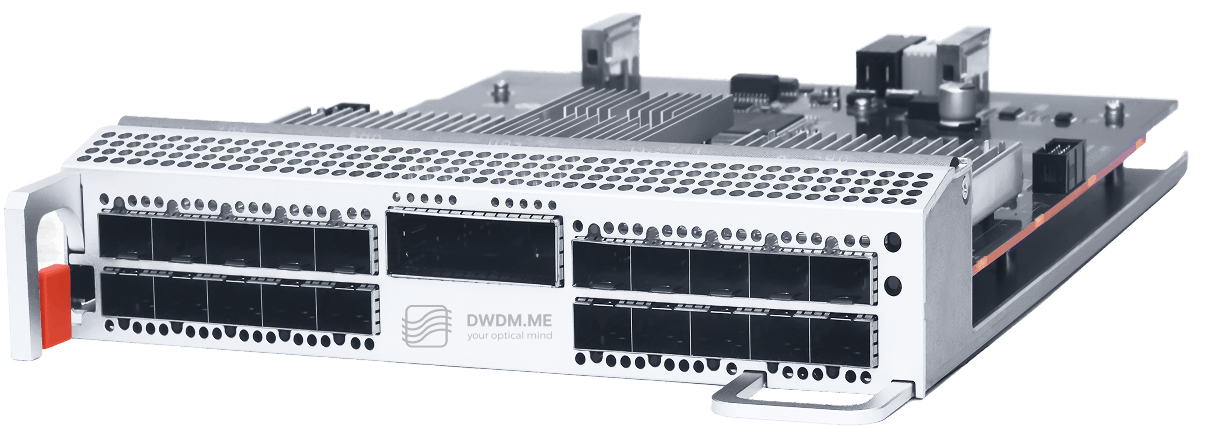

200G LCD-200Q2 Muxponder service card
Client side supports 2x100G interface, providing access to standards for data transmission: 100GE, 100GE FlexE, 100G OTU4The card supports Ethernet RMON monitoringProvides DDM, OSNR monitoring and real-time web monitoringSupports LLDP protocolPower consumption is ≤100W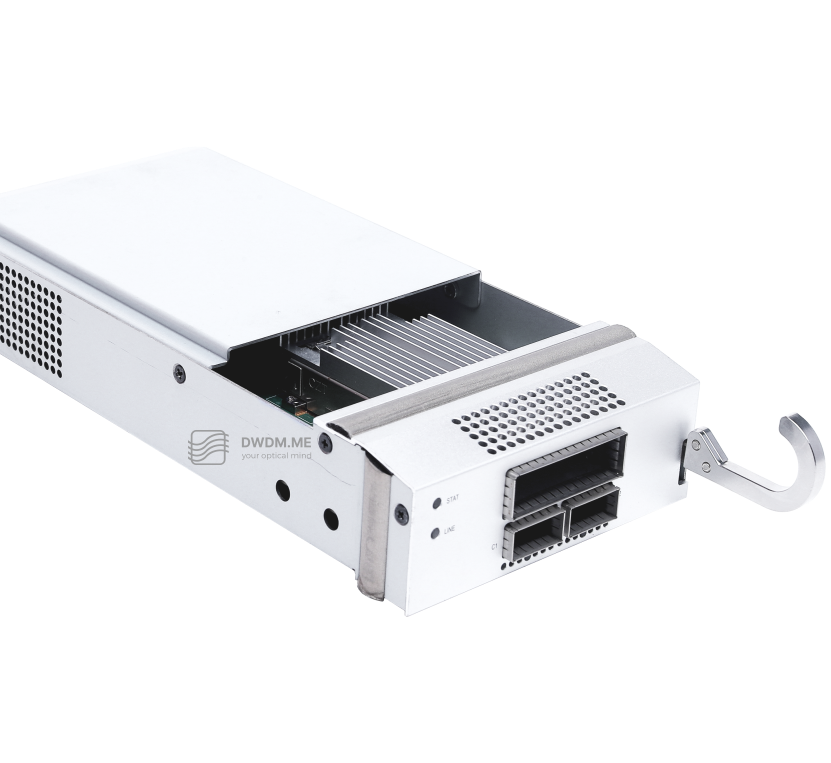

400G LCD-400Q4 Muxponder
service card
CClient side supports 4x100G QSFP28 modules interfacesLine side supports access to 1 x 400G interfacesThe card provides single channel signalling at 200G/400G speedsSupports access to standards for data transmission: 100GE, 100GE FlexE, OTU4, 400GESupports adjustable output power of DCO modulProvides real-time DDM, OSNR monitoring and web monitoringPower consumption is ≤80W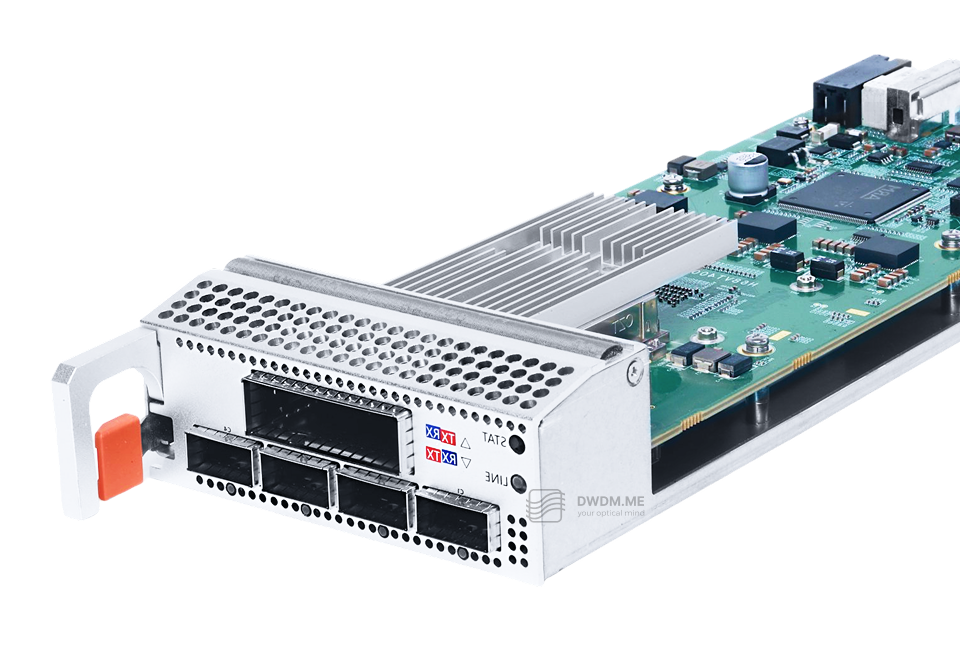

800G LCD-800Q4 Muxponder service card
Client side supports 4x200G and 4x100G interfacesLine side supports access to 2x200G, 2x 400G interfacesThe card provides single channel signalling at 200G/400G speedsSupports access to standards for data transmission: 100GE, 100GE FlexE, OTU4, 400GESupports adjustable output power of DCO moduleProvides real-time DDM, OSNR monitoring and web monitoringPower consumption is ≤100W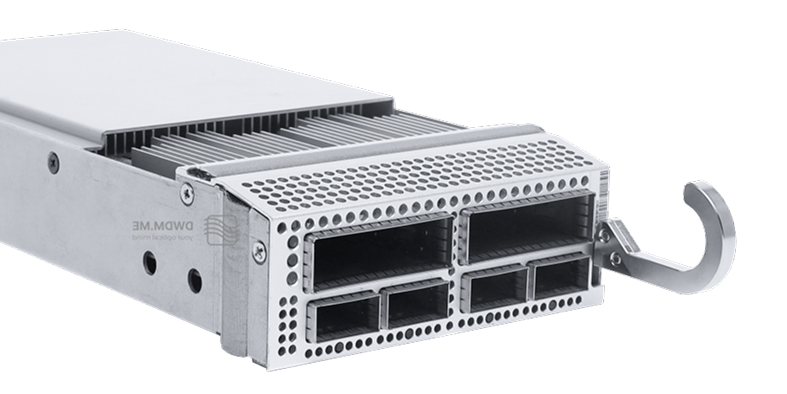

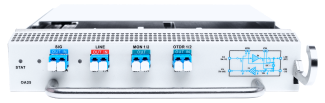
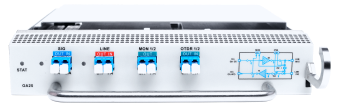
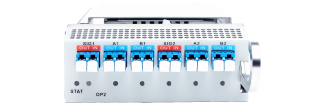
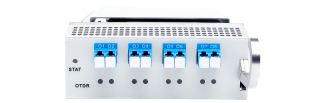
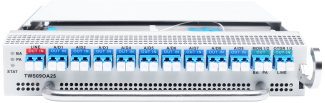
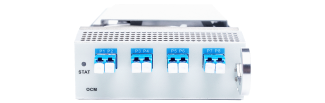
Optical Layer Cards



Product Gallery



Product documentation
Product catalog

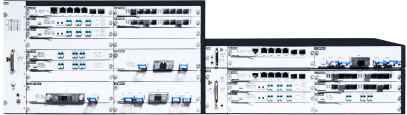


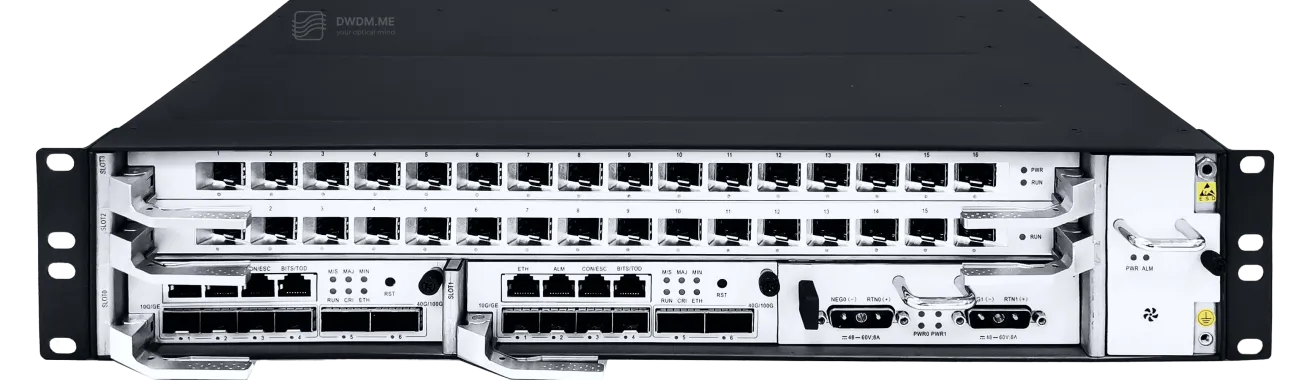
The DCU (Dispersion Compensation Unit) platform is a device used to compensate signal dispersion in fiber-optic networks. It enhances transmission quality and ensures stable long-distance network operation. Using DCU modules guarantees the efficient functioning of networks, including DWDM systems.
Key Features and Advantages of the DCU Data Transmission Platform
The DCU platform offers several benefits that make it essential for both deploying and operating optical networks:
- dispersion compensation – effectively eliminates signal distortion over long-distance data transmission;
- extended transmission range – increases distance between network nodes without signal degradation;
- DWDM equipment compatibility – seamlessly integrates into existing systems, including MU platforms, optical transceivers, and more;
- compact design – modules take up minimal space, are easy to install, and ideal for data centers with limited room;
- low maintenance costs – user-friendly and highly reliable, minimizing operational expenses.
A DCU module is a reliable, efficient, and stable solution for improving signal quality and compensating dispersion in optical networks.
Where DCU Modules Are Used
DCU modules are in demand across various types of network infrastructure. They are particularly effective in:
- backbone and regional fiber-optic networks;
- optical interconnections between data centers (data center construction);
- corporate networks requiring high-speed and stable data transmission;
- telecom and internet service provider networks using DWDM systems.
The use of DCU modules significantly increases system reliability, extends transmission distances, and reduces the risk of signal degradation.
How to Choose a DCU Series Data Transmission Platform
Choosing the right DCU platform is critical for ensuring high-quality data transmission. Consider the following factors:
- transmission distance – determine how far the signal needs to travel to select the proper module;
- type of optical fiber – different fiber types may require specific dispersion characteristics;
- equipment compatibility – ensure that the selected module integrates with existing infrastructure;
- module density and channel count – these parameters help determine the most suitable DCU model.
A properly selected platform ensures successful data center design, efficient system operation, and long-term service life.
Buy DCU Modules with Delivery
Purchasing DCU modules from DWDM.ME is a reliable choice. We offer only original, high-quality products with a warranty. Our assortment includes modules with various specifications to meet your requirements. We also provide fast delivery and competitive pricing on all DWDM equipment.