
 13.03.2025
 5861
5861 Modern telecommunications networks require high reliability, data transmission speeds, and data integrity during exchange. Three key data transmission methods are WDM, CWDM, and DWDM. These spectral multiplexing methods enable the efficient use of existing infrastructure, eliminating the need to lay new fiber-optic lines.
Overview of WDM, CWDM, and DWDM
These three spectral multiplexing methods allow the transmission of multiple data streams over a single optical fiber channel by using different wavelengths. Their key advantage is the increased bandwidth of the network without needing to lay new lines or purchase additional equipment.
What is WDM
WDM (Wavelength Division Multiplexing) is the primary multiplexing technology that splits the light flow into several channels with different wavelengths. Its main task is to increase the volume of transmitted information. WDM is most commonly used in backbone and metropolitan area networks. The technology is divided into two types: CWDM and DWDM. Let’s explore them in more detail.
What is CWDM and DWDM
CWDM (Coarse Wavelength Division Multiplexing) is a simplified version of WDM with larger wavelength spacing. This technology is used in relatively short-range networks and reliably operates up to 80 km. The maximum number of channels is 18, with a wavelength range from 1270 to 1610 nm.
One of CWDM’s advantages is that it does not require laser cooling, which reduces operational costs. However, the technology has limited capacity due to the wide intervals between channels.
DWDM (Dense Wavelength Division Multiplexing) is an enhanced version of WDM with a higher channel density. It supports up to 96 channels on a single optical line using narrow intervals between wavelengths (0.4 to 0.8 nm). This allows DWDM to transmit more data and maintain signal quality over distances up to 6000 km but requires amplifiers. Additionally, laser temperature stabilization and specialized equipment for precise system tuning are necessary.
Applications of WDM, CWDM, and DWDM
The field of application depends on the type of technology, as each has its own characteristics and features. WDM is a basic option recommended for use as a universal solution for increasing channel capacity in provider and corporate networks.
The difference between CWDM and DWDM lies in data density and operational distance while maintaining reliable communication. CWDM is suitable for:
Local networks
Metropolitan optical lines
Carrier networks
Regional connections
DWDM is a technology that enables large data volumes to be transmitted over long distances. It is widely used in submarine cable systems, data centers, backbone networks, and global communication links for service providers.
Advantages and Disadvantages of WDM, CWDM, and DWDM
Each technology has its strengths and weaknesses, allowing for the selection of the optimal solution based on the network’s requirements.
WDM
Advantages:
Increases the capacity of existing infrastructure without the need to lay new lines.
Disadvantages:
Requires specialized equipment for multiplexing and demultiplexing.
CWDM
Advantages:
Affordability and low equipment costs.
Energy efficiency.
Ease of setup and management.
Disadvantages:
Limited number of channels.
Transmission distance does not exceed 80 km without amplifiers.
DWDM
Advantages:
Supports long-distance transmission.
High bandwidth.
Scalability.
Ability to transmit data over 96 channels.
Disadvantages:
High equipment cost.
Requires signal amplifiers.
Temperature stabilization of lasers is required.

Key Differences Between WDM, CWDM, and DWDM
To choose the optimal technology, it is important to understand the key differences between WDM, CWDM, and DWDM. The table below provides a detailed comparison of these technologies based on key parameters.
| Parameter | WDM | CWDM | DWDM |
| Number of Channels | 2–96 | Up to 18 | Up to 96 |
| Wavelength Spacing | 0.4–50 nm | 20 nm | 0.4–0.8 nm |
| Wavelength Range | 1260–1625 nm | 1270–1610 nm | 1525–1565 nm (C-band), 1570–1610 nm (L-band) |
| Maximum Transmission Distance | Up to 6000 km (with amplifiers) | Up to 80 km | Up to 6000 km (with amplifiers) |
| Need for Amplifiers | Required over long distances | Not required | Required |
| Equipment Cost | Medium | Low | High |
| Setup Complexity | Medium | Simple | High |
| Application | Increase optical network capacity | Urban networks, local connections | Backbone networks, data centers, submarine lines |
| Laser Cooling Requirements | Depends on the system type | Not required | Required |
| Energy Efficiency | Medium | High | Medium |
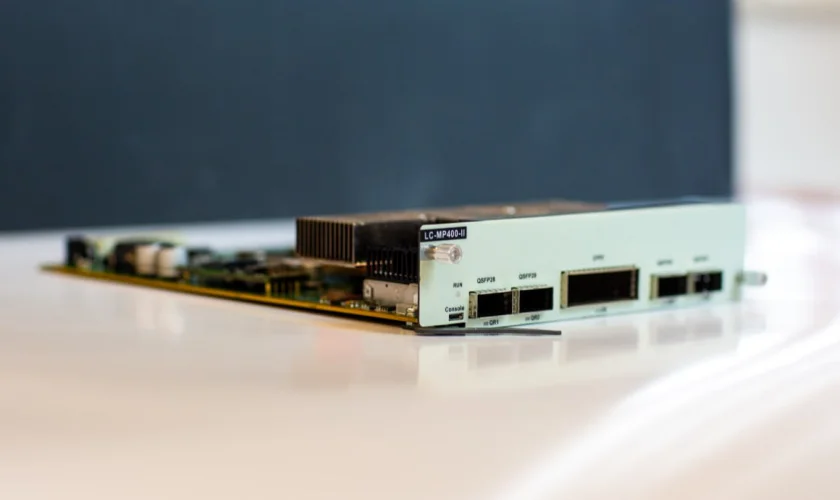
For data transmission, all three technologies use optical transceivers, but the required type depends on the tasks at hand.
How to Choose WDM, CWDM, and DWDM
When choosing the appropriate option, several key factors should be considered:
Transmission Distance: DWDM provides the highest reliability for long-distance data transmission.
Cost: CWDM is the most cost-effective solution, but it is suitable only for short distances.
Infrastructure Type: For corporate and urban networks, CWDM is sufficient, while for intercity or international networks, DWDM equipment is better suited.
Number of Channels: CWDM is suitable for low traffic, while DWDM is for high data density networks.
Spectral multiplexing technologies significantly increase the capacity of fiber-optic lines. The optimal choice depends on the tasks at hand and the budget.