
 21.03.2025
 325
325 With growing demands for speed and data transmission volume, optical modules—or SFP transceivers—have become a key element in network infrastructure. These compact devices ensure reliable transmission and reception of information, simplifying the expansion and upgrading of communication equipment. Let’s explore the main functions, types, and features of SFP modules.
What Is an SFP Optical Module?
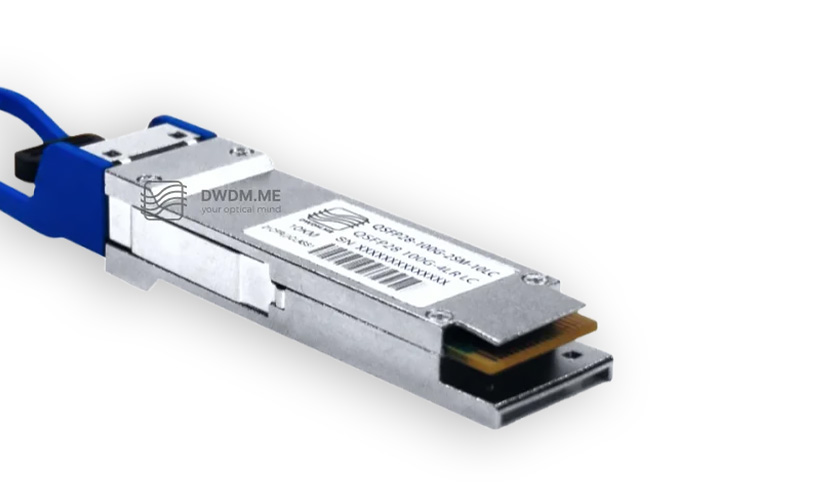
An SFP module (Small Form-factor Pluggable) is a compact device used for transmitting and receiving data over fiber-optic connections. It contains electronic components that form, encode, and decode information, converting electrical signals into optical pulses and vice versa.
The main advantages of SFP modules are versatility and convenience. They support hot-swapping, allowing modules to be replaced without powering down the equipment. SFPs are also energy-efficient and compact, making them an optimal solution for modern network infrastructures.
What Is an SFP Module Used For?
SFP modules are compact devices that provide stable, high-speed data transmission over various distances. They are widely used in telecom and enterprise networks, surveillance systems, and data centers. Their high reliability and performance make them essential for environments where uninterrupted data transmission is critical.
Key tasks SFP modules help solve:
data transmission over long distances — from 10 meters up to 100 kilometers;
easy setup of backup communication channels;
connecting network equipment with different standards;
upgrading and expanding existing infrastructure without replacing core hardware.
SFP optical modules help simplify network maintenance and reduce operational costs. They make infrastructure more convenient, flexible, and easily scalable.
Types of SFP Modules
There are several types of SFP modules, each suited to specific use cases. The differences depend on data rate, transmission distance, and cable type.
Main types include:
- Multimode Modules (MMF): Designed for use with multimode fiber. Ideal for distances up to 550 meters. Recommended for enterprise and LAN networks, such as within data centers.
- Single-mode Modules (SMF): Designed for long-distance data transmission—up to 100 km or more—using single-mode fiber. Best for provider networks and backbone links.
- Copper Modules (RJ-45): Work with twisted-pair Ethernet cables. Support transmission distances up to 100 meters, suitable for office or in-room connectivity.
- WDM Modules (Wavelength Division Multiplexing): Designed for use with wavelength division multiplexing over optical fiber. Common and simple solution for spectral multiplexing.
It’s essential to choose the right SFP transceiver. For example, in an office, a copper or multimode module is sufficient. For branch office connectivity, WDM or single-mode is more appropriate.

What’s the Difference Between SFP and SFP+?
Although SFP and SFP+ transceivers look similar, they differ significantly in performance. Here’s a comparison table:
| Parameter | SFP | SFP+ |
| Data Rate | up to 1 Gbps | up to 10 Gbps |
| Max Transmission Distance | up to 100 km | up to 80 km |
| Supported Cable Types | MMF, SMF, RJ-45 | MMF, SMF, Direct Attach (DAC) |
| Power Consumption | low | medium |
| Use Cases | LANs, metro networks, small ISPs | data centers, large providers, high-traffic networks |
If speed is a priority, choose SFP+. Otherwise, a standard SFP is usually sufficient.
How to Choose an SFP Module
When choosing an SFP module, consider the following factors:
cable type – affects transmission distance;
required speed – determines the module class (SFP or SFP+);
planned distance – ensure the module supports the intended range;
equipment compatibility – especially brand and port support;
operating wavelength – especially important in WDM systems to ensure compatibility with DWDM equipment.
Choosing the right SFP module guarantees high connection quality and ease of use in your network infrastructure.