
 20.05.2025
 1331
1331 Fibre optic cables are essential components of modern telecommunications. They ensure high-speed data transmission over long distances with minimal loss. Unlike traditional copper cables that use electrical signals, optical cables transmit data via light pulses, offering faster and more reliable connections. Thanks to these advantages, fibre optic cables have become indispensable across industries – from internet services to television broadcasting.
What Is an Optical Cable
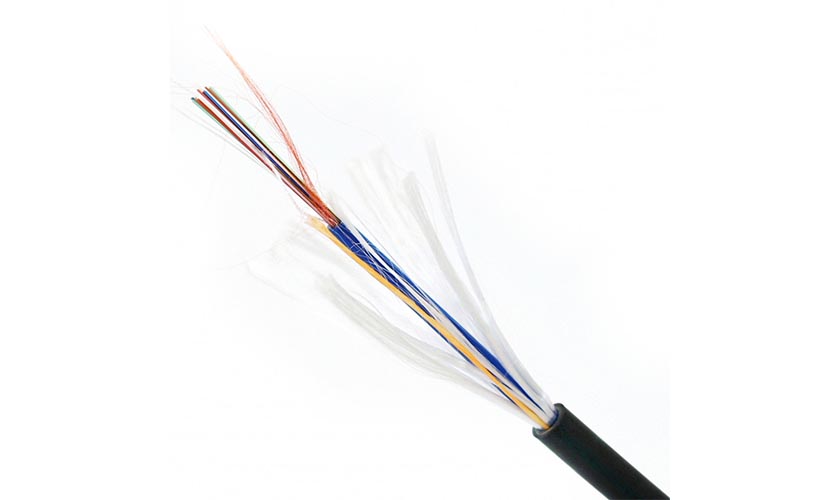
An optical cable transmits data through light pulses. The signal travels in the form of light, which allows for much higher speed and greater distance than copper cables, which rely on electrical impulses. The core of an optical cable is made of glass or plastic fibres, which efficiently carry the light signal with minimal attenuation.
What Is Optical Cable Used For
Fibre optic cables are widely used across multiple sectors:
Internet and telecommunications – deliver high-speed network access;
Cable television – improve the quality of video and audio signals;
Medical equipment – integrated into diagnostic and imaging devices;
Industry – used for control and monitoring of production processes.
Because of their high bandwidth and resistance to interference, optical cables play a key role in modern communication systems.
Advantages and Features of Fibre Optic Cable
Optical cables offer several important advantages:
High data transmission speed – up to several terabits per second;
Low signal loss – long-distance transmission with minimal need for repeaters;
Immunity to electromagnetic interference – unaffected by external electromagnetic fields;
Compact and lightweight – significantly smaller and lighter than copper cables.
These features make fibre optic cables the optimal solution for modern networks, especially when paired with optical transceivers.
Types of Fibre Optic Cables
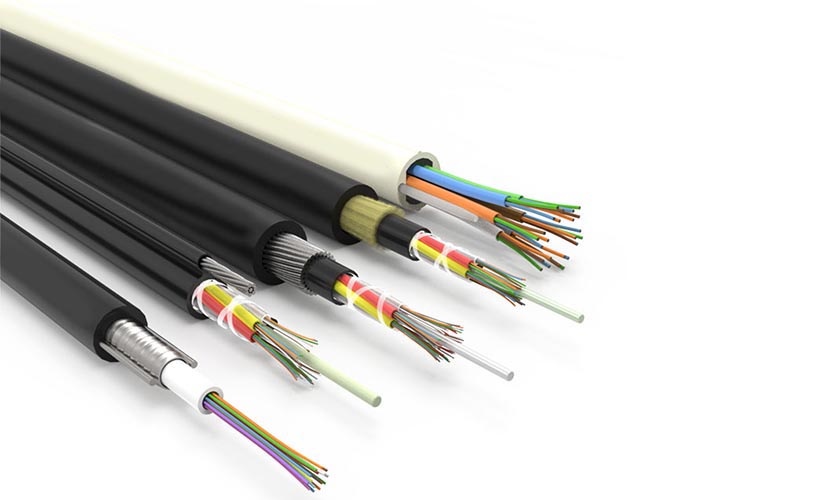
Each type of optical cable has a specific structure, application area, and performance characteristics. The right choice depends on transmission distance, installation conditions, and performance requirements. The most common types include:
Single-mode (SM). Designed for long-distance transmission – tens to hundreds of kilometers. A narrow core (~9 µm) minimizes loss and provides high-speed data transfer. Commonly used in backbone networks, long-haul communications, and optical transport infrastructure.
Multimode (MM). Ideal for shorter distances – up to 2 km. Frequently used in buildings, campuses, and data centres. With a wider core (50 or 62.5 µm), they are easier to install but have more limited transmission ranges.
Self-supporting. Reinforced with a strong tensile element, enabling aerial installation without the need for support structures. Suitable for urban telecom networks.
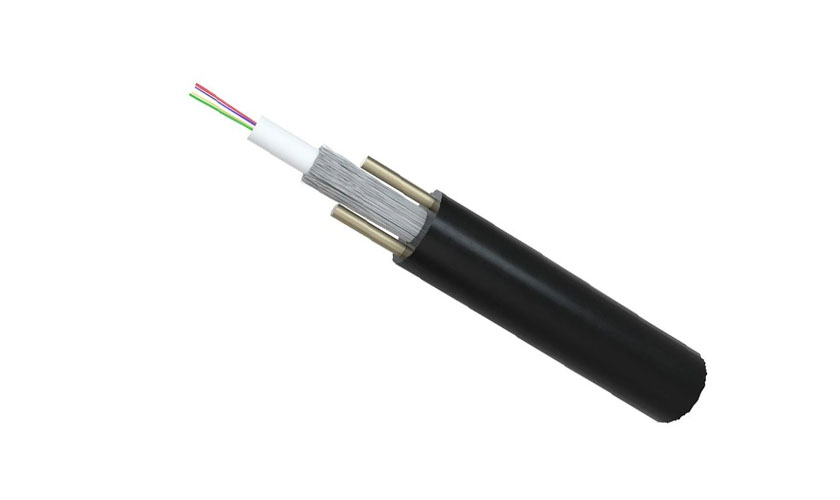
Armoured. Equipped with metallic shielding for enhanced protection against mechanical damage and environmental conditions. Ideal for underground, outdoor, and industrial installations, including ducts and underwater sections.
Choosing the right fibre optic cable ensures stable network performance and reduces operational risks.
How Optical Cable Works
Data is transmitted through the optical cable in the form of light pulses rather than electrical signals. The core, made of glass or plastic, guides the light. The light source is typically a laser or LED, and the data is encoded in short flashes.
The key advantage of this method is high-speed transmission over long distances with minimal signal degradation. Light reflects within the core at a specific angle, preserving signal integrity even over kilometres.
How to Connect an Optical Cable
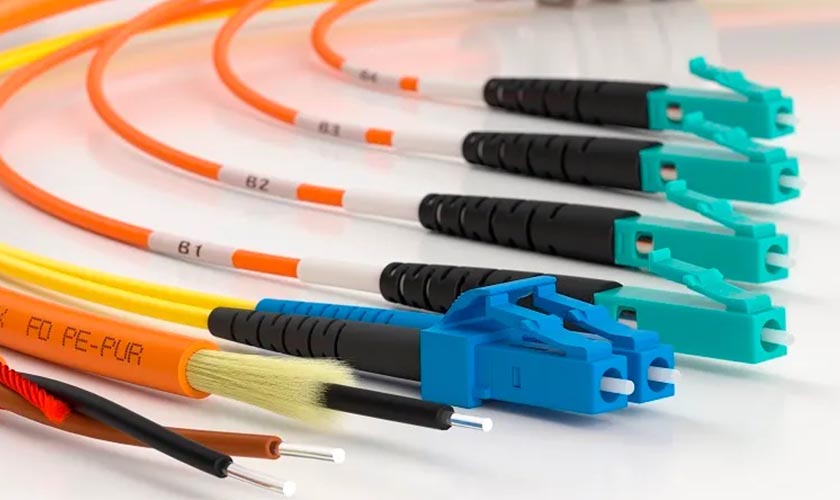
To properly connect an optical cable, use specialised connectors such as SC, LC, ST, depending on the DWDM equipment in use. The connection must be precise – optical fibre is fragile, and excessive bending can cause damage.
Usually, the cable is connected to an optical terminal or transceiver module, such as an SFP installed in network equipment. After connection, it’s recommended to check the signal with a power meter or optical tester. For best results, installation should be handled by professionals who can ensure proper termination, especially for single-mode links.
How to Choose the Right Optical Cable
When choosing a fibre optic cable, consider the following key factors:
Installation Environment. Identify where the cable will be installed – underground, indoors, aerially, or in environments with temperature fluctuations.
For outdoor use, UV protection, moisture resistance, and mechanical durability are crucial. The best options are self-supporting or armoured cables.
For indoor use, a lightweight jacketed cable is ideal – it’s easier to install and more cost-effective.Bandwidth and Distance. For short-range networks (e.g., within one building), multimode cables are typically used. For distances over 2 km, single-mode is preferred due to its stability and low loss. In long-distance links, optical amplifiers EDFA may be required.
Equipment Compatibility. Pay attention to connector type, fibre diameter, and fibre count. Choose cables with extra length and durability to accommodate bends and future expansion.
A careful and informed choice of fibre optic cable ensures high-quality data transmission without loss and guarantees the long-term reliability of your network infrastructure.